← All guides
Guide · Traditions

Planning a Māori marae wedding

your way

Te Ara records that traditional Māori society had no single marriage ceremony; unions were marked by gifts and, for chiefly marriages, great feasts. Today a marae wedding places a legal ceremony, often Christian or celebrant-led, inside marae tikanga.
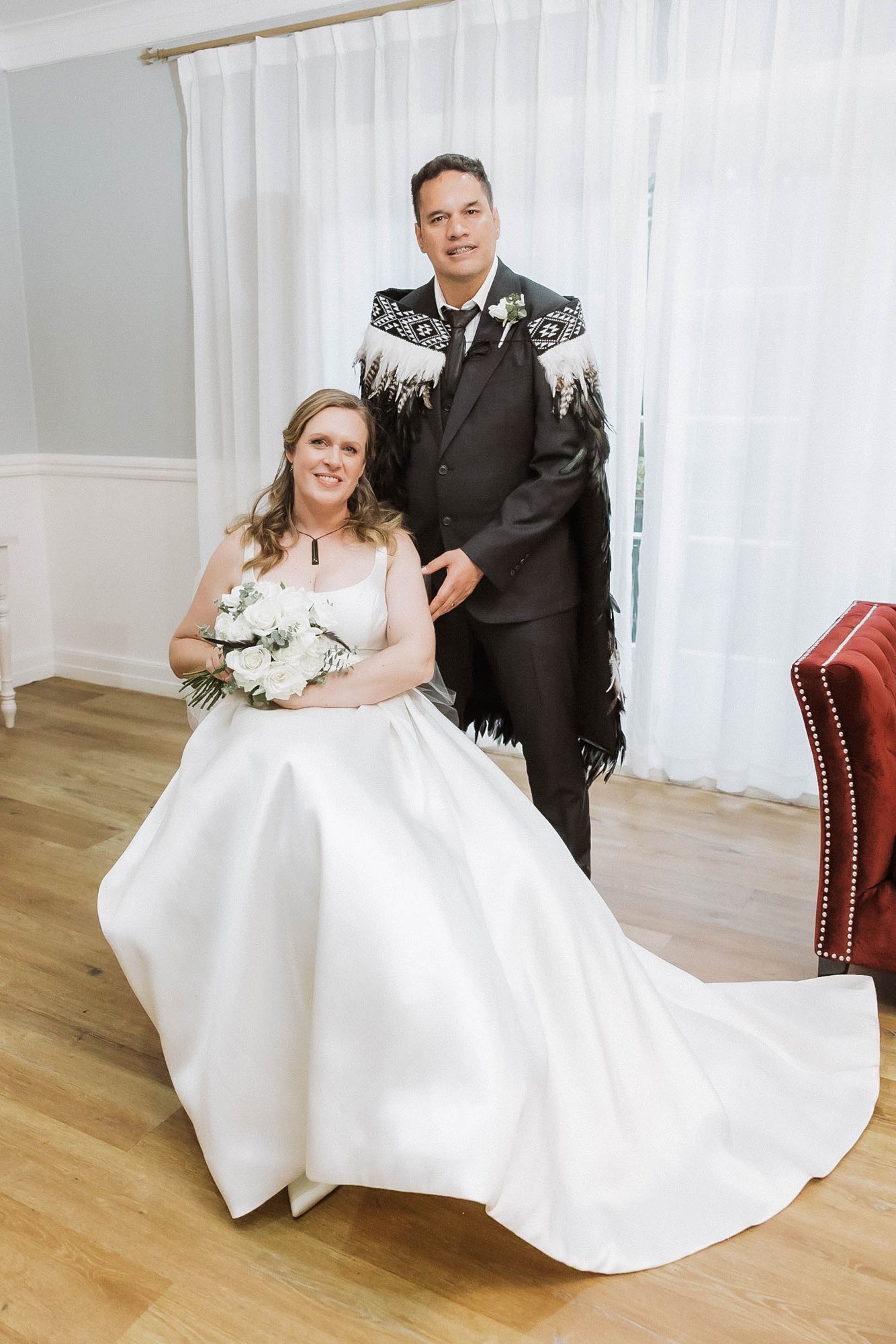
Groom in a korowai beside his bride, Auckland
Auckland
The koru4 moments · 7 planning steps · 6 regional styles

Every marae has its own kawa (protocol), set by the hau kāinga (home people) and the marae committee. Nothing here overrides what they say. Iwi and hapū differ on who speaks, the language used and what is permitted. Your family, priest or officiant has the final word.

The story of the day

What happens

  1. 1
    PōwhiriFormal welcome of visitors onto the marae
  2. 2
    KaiLight food after the welcome
  3. 3
    CeremonyKarakia (prayer), vows and waiata (song), where the marae allows
  4. 4
    HākariFeast in the wharekai
  5. MarriedThe promise at the end of the path
Checklist

When to do what

  1. 12+ months to goApproach the marae committee and kaumātua (elders); confirm the date
  2. 9 months to goBook the marae; ask about hire, alcohol and overnight stays, and what happens if a tangihanga (funeral) is called
  3. 6 months to goArrange the celebrant or minister, kaikaranga (caller) and kaikōrero (speaker)
  4. 3 months to goPlan the hākari with the kitchen team
  5. 1 month to goSend guests a short guide to marae tikanga; choose and practise the waiata
  6. The final weekPrepare the koha (gift)
  7. On the dayGather visitors at the gate early so everyone enters together

Who has a role

  • Kaumātua and kuia
  • kaikaranga
  • kaikōrero
  • celebrant or minister
  • ringawera (kitchen workers)
  • a helper to guide guests

What you will need

  • Koha
  • waiata sheets
  • rings
  • any whānau taonga such as a korowai (cloak)
  • treated as treasures

For your guests

  • Arrive early and enter together. Never walk in during the pōwhiri.
  • Phones off. Follow the lead of the home people.
  • Shoes usually come off at the door of the wharenui (meeting house), and no food or drink goes inside.
  • Koha is separate from any hire fee.

For your photographer

  • Ask permission before photographing during the pōwhiri or inside the wharenui.
  • Put the pōwhiri and kai in the timeline before the ceremony.
The heart of it

Traditional

  • No single wedding rite: whānau and hapū (family and sub-tribe) approval made the union.
  • Taonga (treasures) were sometimes given by one family to the other.
  • Taumau: arranged marriages, often to link hapū or iwi.
  • Hākari: great feasts when rangatira (chiefs) married into another hapū or iwi.
  • Pōwhiri: karanga (call), whaikōrero (speeches), waiata (song), koha, then hongi and harirū (pressing noses, shaking hands).
  • Shared kai after the welcome lifts the tapu (sacredness) of the ceremony.
  • Koha: once food or treasures, today usually money in an envelope.
How couples adapt it

Modern

  • A legal ceremony led by a registered celebrant or minister is held within marae tikanga (custom).
  • Vows, karakia (prayer) and waiata are often in te reo Māori, English or both.
  • Whānau taonga such as a korowai (cloak) may be worn if the whānau offers them.
  • Urban and multi-tribal marae adapt tribal traditions for mixed groups.
  • Guests new to marae are sent a short guide and a waiata to learn beforehand.
  • Many marae now publish a hire handbook that sets out fees, bond and house rules.
Two cultures, two faiths

Blending it with another culture

  • Marae kawa (protocol) is set by the hau kāinga (home people). It is not adapted to suit the wedding.
  • Ask the marae committee and kaumātua (elders) first. Then shape the other culture's parts around what they allow.
  • The pōwhiri comes first and in full. Other rituals belong after it, in the place the hosts suggest.
  • Ask before bringing in another faith's rites, fire, candles, alcohol or amplified music. Each marae decides.
  • The other family can take part as manuhiri (visitors) with their own speaker, song and koha. Ask a kaumātua to guide them.
  • Food from the other culture is usually welcome in the wharekai. Agree it with the kitchen team.
  • If a rite cannot be held on the marae, hold it at a second venue or on another day.

More on blending two cultures in one wedding

Good to do

Do

  • Do arrive early and wait at the gate to be called on together.
  • Do arrange a kaikaranga (caller), a speaker, a waiata and a koha for the visiting side.
  • Do stand to support your speaker with a waiata after the speech.
  • Do take your shoes off at the wharenui unless the hosts say otherwise.
  • Do thank the ringawera (kitchen workers) and help clean up.
  • Do ask when unsure. Hosts would much prefer a question to a mistake.
Common mistakes

Avoid

  • Avoid walking onto the marae once a pōwhiri has begun. Wait to be brought on.
  • Avoid eating or drinking during the welcome, and never take food into the wharenui.
  • Avoid taking photos or video without permission, above all inside the wharenui.
  • Avoid treating koha as the hire fee. Koha is part of the welcome and is given freely.
  • Avoid assuming one marae's rules apply at another. Kawa differs between iwi and marae.
  • Avoid bringing alcohol until you have checked. Some marae ban it and others limit it to the wharekai.
Before you book anything

Check first

  • With the marae committee: the date, hire costs, bond, and what happens if a tangihanga is called.
  • With kaumātua: the kawa for the pōwhiri, who may speak, and where the ceremony may be held.
  • With the committee: the rules on alcohol, photography, music, decorations and overnight stays.
  • With the celebrant or minister: that they are registered, hold your marriage licence and are comfortable with the kawa.
  • With the kitchen team: numbers, menu, and who is cooking and serving.
It is not the same everywhere

How it differs by place and community

Te Arawa and Tainui iwi

Speeches broadly follow tau utuutu, where host and visiting speakers take turns.

Most other iwi

Speeches follow pāeke, where all the host speakers go first and the visitors follow.

Ngāti Porou and Ngāti Kahungunu (East Coast)

Renowned women orators are remembered here, while in most areas women call and men speak.

Te Āti Awa at Waiwhetū

The hongi and harirū come before the speeches instead of after.

Some southern marae

Shoes may be kept on inside because of the cold, so follow the hosts.

University and urban marae

Many are alcohol-free and multi-tribal, and some do not allow photos of the interior.

References (10) · checked 25 November 2026

Customs vary by family, so treat this as a guide and ask your elders or officiant.

Planner & guide

Plan it in Vows Ahead

every step to forever

Your checklist, budget, guests and the day timeline in one place, with an invitation website and RSVP.