← All guides
Guide · Traditions

Planning an Indian Hindu wedding

your way

A Hindu wedding (vivaha) is a sacrament performed before a sacred fire, usually spread over several days of family events. The rituals join two families as well as two people.
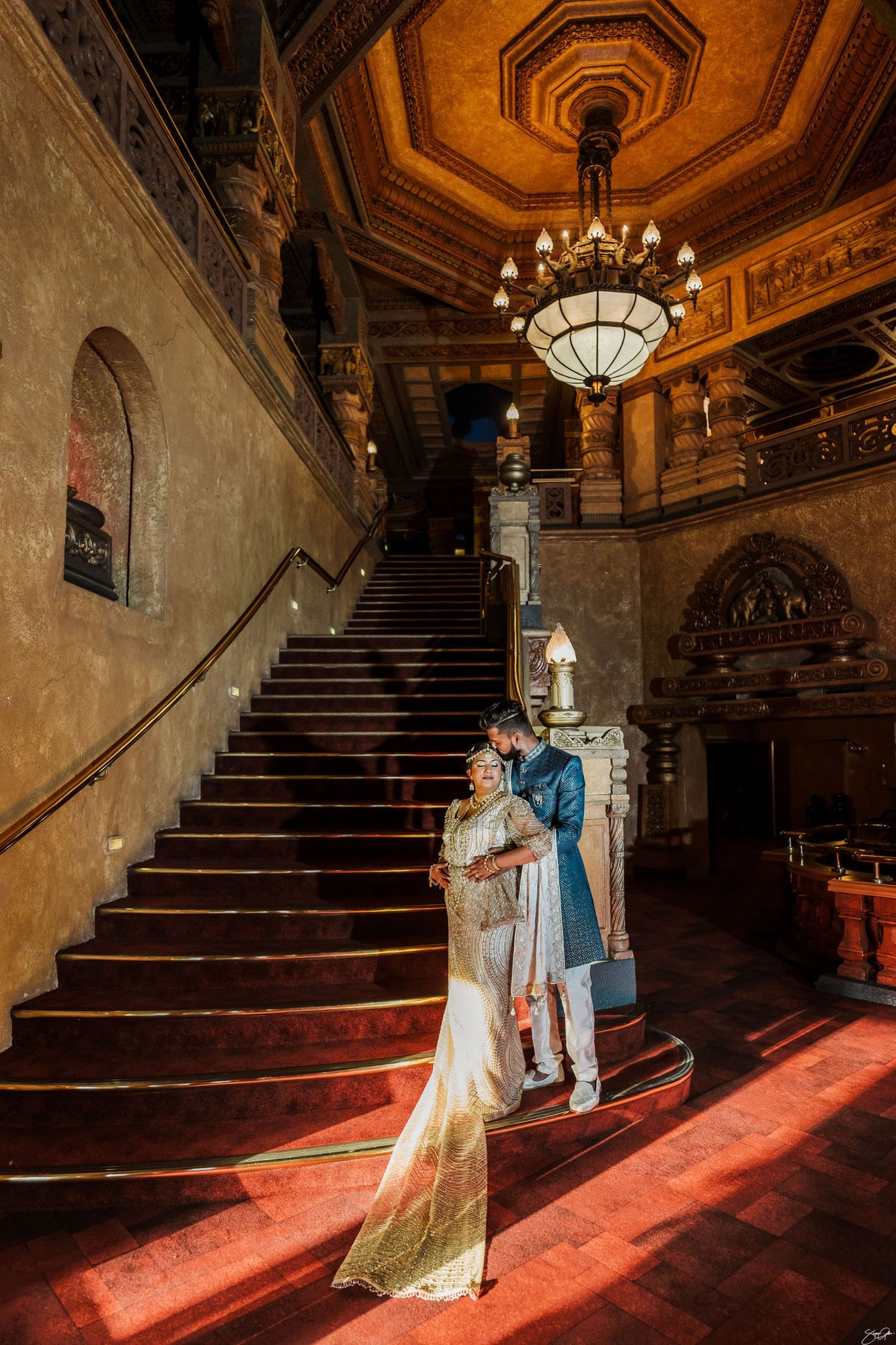
Bride in a gold lehenga on the Auckland Town Hall staircase
Auckland Town Hall
The sacred fire11 moments · 7 planning steps · 5 regional styles

Order, names and which rituals are included vary widely by region, community and family priest. North Indian weddings often have a baraat and seven pheras; Gujarati weddings have four pheras then a separate seven steps; Tamil and Telugu weddings are usually in the morning at a time chosen by horoscope, with the tying of the thali. Your family, priest or officiant has the final word.

The story of the day

What happens

  1. 1
    Roka or sagaiFormal agreement and engagement, months before
  2. 2
    MehndiHenna for the bride, 1 to 2 days before
  3. 3
    HaldiTurmeric blessing, the day before or that morning
  4. 4
    SangeetMusic and dance night
  5. 5
    Baraat and milniThe groom's procession; the families greet
  6. 6
    Varmala (jaimala)Exchange of garlands
  7. 7
    KanyadaanGiving away the daughter
  8. 8
    Pheras and saptapadiCircling the fire; seven steps and vows
  9. 9
    Sindoor and mangalsutraMarks of marriage
  10. 10
    VidaaiThe bride's farewell
  11. 11
    Reception
  12. MarriedThe promise at the end of the path
Checklist

When to do what

  1. 12+ months to goAsk your priest for an auspicious date (muhurat); book venues
  2. 9 months to goBook the pandit, mandap decorator and caterer
  3. 6 months to goOrder outfits; book the mehndi artist, and dhol or horse for the baraat
  4. 3 months to goAgree the list of rituals with both families and the priest
  5. 1 month to goBuy the puja items; rehearse the sangeet
  6. The final weekMehndi, haldi and sangeet
  7. On the dayCheck the venue allows the fire; ask someone to mind the shoes

Who has a role

  • Pandit
  • both sets of parents
  • siblings and cousins with ritual roles your priest will explain

What you will need

  • Mandap
  • fire vessel (havan kund)
  • garlands
  • mangalsutra or thali
  • sindoor
  • coconut
  • rice
  • ghee

For your guests

  • Bright colours are welcome. Many guests avoid black, white and bridal red, though this varies.
  • Shoes come off at the mandap.
  • Guests may move about and chat during a long ceremony.

For your photographer

  • Key moments: varmala, kanyadaan, pheras, sindoor, vidaai.
  • Fire and smoke affect the light and can set off alarms.
  • The ceremony follows the auspicious time, not the clock: build in buffer.
The heart of it

Traditional

  • Muhurat: the priest picks an auspicious date and time.
  • Varmala or jaimala: exchanging garlands to show you accept each other.
  • Kanyadaan: the bride's parents give their daughter in marriage.
  • Pheras: walking around the sacred fire, which acts as witness.
  • Saptapadi: seven steps together, each with a vow. Under India's Hindu Marriage Act the marriage is complete at the seventh step where this rite is part of the custom.
  • Sindoor and mangalsutra or thali: red powder and a necklace that mark a married woman.
  • Vidaai: the bride's tearful farewell to her own family.
How couples adapt it

Modern

  • Shortening the ceremony and asking the priest to explain each step in English.
  • Printing a simple programme so guests can follow the rituals.
  • Choosing a woman priest, which some couples now do.
  • Rewording or sharing rites such as kanyadaan so both families take part equally. Ask your priest what he or she will accept.
  • Combining mehndi, haldi and sangeet into one or two events to save cost and travel.
  • Holding the fire ceremony at a hotel or outdoor venue instead of a temple or family home.
Two cultures, two faiths

Blending it with another culture

  • Hinduism has no formal rule against marrying outside the faith, and the non-Hindu partner is not normally asked to convert.
  • Priests differ. Some gladly lead mixed-faith weddings. Others say no, especially if the couple want to remove core Hindu elements. Ask early.
  • The most common plan is two ceremonies: a full Hindu ceremony with a priest, and the other faith's ceremony with its own officiant, on the same day or on different days.
  • A single fused ceremony is possible when both officiants agree. Keep the core Hindu rites whole (fire, pheras, seven steps) and add the other faith's vows, readings or blessings around them.
  • The limit often comes from the other side. For example, a Catholic partner usually needs church permission and is asked to promise to raise children Catholic. Check the other faith's rules as carefully as the Hindu ones.
  • Give the partner's family real roles: carrying garlands, joining the baraat procession, giving a blessing, or walking in with the groom or bride.
  • Share the fun events. Mehndi, haldi and the sangeet are cultural, so both families can join in without any religious concern.

More on blending two cultures in one wedding

Good to do

Do

  • Agree the list of rituals with both families and the priest months ahead.
  • Ask the priest for a written running order with timings.
  • Brief the partner who is new to the culture on what they will say and do at each step.
  • Tell guests in the invitation what to wear and how long the ceremony runs.
  • Remove your shoes before stepping onto the mandap, the canopy where the ceremony happens.
  • Feed guests well and on time. Many families serve vegetarian food at the ceremony, so ask.
Common mistakes

Avoid

  • Do not assume all Hindu weddings look the same. A Gujarati, Tamil and Bengali wedding differ a great deal.
  • Do not book a venue before checking it allows an open flame.
  • Do not cut or reorder rituals without the priest's agreement.
  • Guests: do not be offended if people chat or move about. This is normal in a long ceremony.
  • Guests: many people avoid black, white and bridal red, though this varies by family. Ask if unsure.
  • Partner new to the culture: do not step over or touch ritual items with your feet, and follow the priest's lead on when to sit, stand and offer into the fire.
Before you book anything

Check first

  • With the priest: which date and time are auspicious, and which rituals he or she will include, shorten or decline.
  • With the priest: whether he or she will lead a mixed-faith or fused ceremony, and in which language.
  • With the venue: written permission for a real fire, smoke alarm arrangements, and access for a baraat procession, horse or drums.
  • With family elders: which regional and family customs matter most, and whether food should be vegetarian and alcohol-free at the ceremony.
  • With the local registrar: whether the Hindu ceremony counts as a legal marriage where you live, or whether you also need a civil registration.
It is not the same everywhere

How it differs by place and community

North Indian (for example Punjabi Hindu, Hindi-speaking regions)

Often an evening wedding with a baraat procession for the groom, a garland exchange and seven pheras around the fire.

Gujarati

Four pheras around the fire, usually linked to the four aims of life (duty, prosperity, love and spiritual freedom), followed by a separate seven steps.

Tamil

Usually a morning wedding at a set auspicious time, with playful rites like the kashi yatra (the groom pretends to leave to become a monk) and the oonjal swing, and the tying of the thali necklace with three knots.

Bengali

The bride is carried around the groom seven times with betel leaves over her face, then lowers them for the first look (shubho drishti), and the groom later applies sindoor.

Diaspora (UK, North America, Australia, New Zealand)

Ceremonies are often shortened and explained in English, may be led by a woman priest, and usually sit alongside a separate civil registration.

References (9) · checked 25 November 2026

Customs vary by family, so treat this as a guide and ask your elders or officiant.

Planner & guide

Plan it in Vows Ahead

every step to forever

Your checklist, budget, guests and the day timeline in one place, with an invitation website and RSVP.